Detail of the cover for The Godmother's Secret

The Godmother’s Secret: Guest post by Elizabeth St. John and excerpt

In the past, it has been a privilege to host historical fiction author Elizabeth St. John on my website, and I’m delighted to welcome her back again. Elizabeth shares a passion for the 17th century and the Stuart Age, and her novels are all gleaned from the vaults of her illustrious family’s history. Her ancestors were at the centre of events during tumultuous times, and she offers a unique perspective in her novel.

Early Modern Women protesting with vim and vinegar

I am on the <research> road again. I love the moment of researching for a new book, which will be my fourth. The title shall remain nameless for now. I have learned that if I publicly announce the title, something invariably will arise that would leave me no choice other than to change the title (Writer Murphy’s Law No. 10*), and I really like The Book That Should Not Be Named. [*Side Note: This is why writers use shorthand and just refer to the project as WIP, in case you’re wondering.] But I digress . . . already. But then…

Inspired to write an Irish rebel story

It all started with a song. Music inspires my creative Muse, and the writing doesn’t entirely flow until I’ve settled on a soundtrack. This time, however, it wasn’t a soundtrack that got me dreaming of characters and the story that would become Rebel’s Knot. It was one particular song.

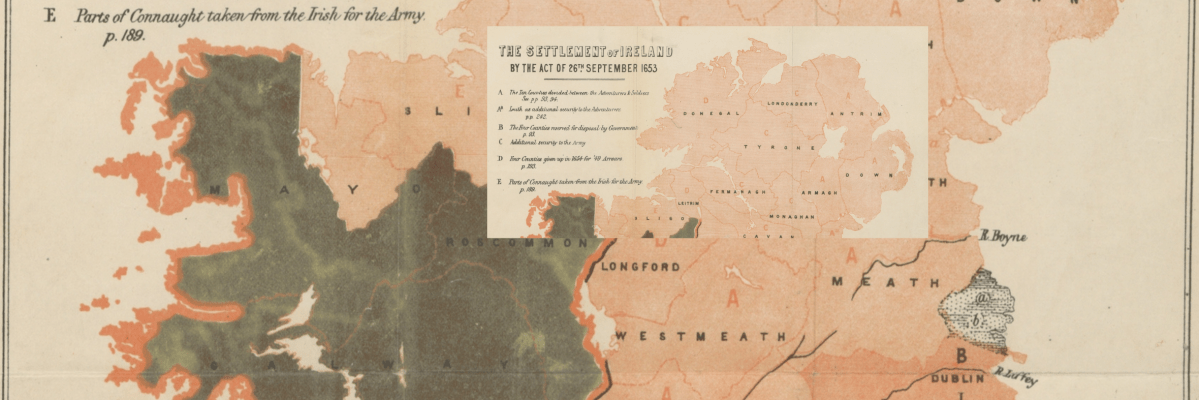
Treaties between the Irish Brigades and English Commonwealth Parliamentary Forces in 1652 #17thcentury #history

After nearly three years fighting the English Parliamentary invaders, the Irish brigades (Tories) began to sue for peace in the early part of 1652. They had very little choice. Neither France nor Spain had come to Ireland’s defence, being more concerned with keeping diplomatic relations with the new English Commonwealth. Aid promised by the Duke of Lorraine had come too little and too late. The Irish brigades had committed themselves well, but the time had come to make terms with the enemy.

Promised supplies for the Irish from the Duke of Lorraine: The relief that fell short

In what would be the final months of the Irish resistance against the Cromwellian conquest of Ireland, the Irish brigades were at a breaking point. Since Oliver Cromwell landed in Dublin with an invading force in August 1649, the Irish forces (at first centralized, then fractured into autonomous brigades) relied on support from local populations. But by the end of 1651, the brigades were desperately short of supplies and faced the prospect of surrender.