What will we leave behind for historians?

A couple of Monday’s ago, a post caught my attention on Twitter’s #MondayBlogs. The author, Samantha Tonge, found a bag of old love letters and spent an afternoon re-reading them and reconnecting with the emotions written on the pages. She wondered about today’s generation, reliant on their texts and email, which will never have the experience of re-reading old letters. Looking at my generation, we’re probably the last of the letter writers, and I’m shocked when I contemplate this. My sons’ generation have never known the anticipation of checking the mailbox for a reply to a personal correspondence, the anticipation made sweeter…

Battle Scenes

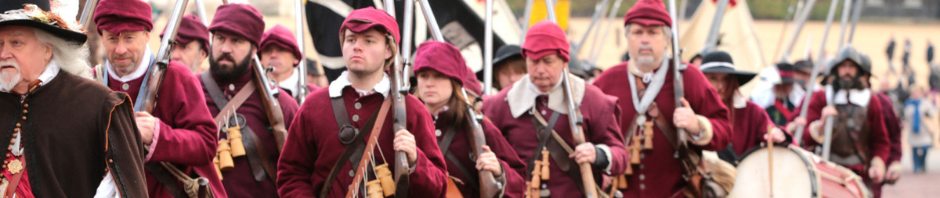
That’s it. I’m just going to say it. I love battle scenes. I have no idea why, but they make me mad with excitement. I want to grab a sword or a pistol (a doglock pistol, thank you) and just rush into the thick of it. On a fine horse, of course. Fine dresses and jewels? Not as exciting as buff coats and bandoliers. It doesn’t matter if the battle scene happens on the sea (Master and Commander), on a beach (Robin Hood), in the Hellmouth (Buffy), or even in this excellent YouTube video produced by the English Civil War Society about…

17th Century Author Spotlight with Sheila Dalton

The 17th Century is the new frontier in historical fiction, and I’m delighted to spotlight a fellow adventurer. Please welcome Sheila Dalton, author of Stolen, who will share with us her thoughts and inspiration about her work. But before we meet Sheila, here is a video clip of her novel Stolen. Enjoy! Sheila, you’re an eclectic writer, with your books ranging from literary fiction, poetry, YA and children’s books. Stolen is your first historical with action/adventure and romance set in the 17th Century. What inspired this story? The story was inspired by trips to both Devon, England and Morocco. In Morocco, I…

The Start

Following the execution of his father by Parliament in 1649, Charles Stuart (later Charles II) was a king without a throne. He scanned the dance floor for likely partners to help him reclaim his crown, but France, Spain and the Netherlands were taking turns examining the potted plants. There were no takers until Scotland stepped forward and motioned to the orchestra. It was a slow and hesitating waltz, broken by alternate periods of negotiation and stubbornness on both sides. Scotland was looking for a Covenanted king, one who would uphold Presbyterianism across the three kingdoms (Scotland, England and Ireland). Reluctantly Charles agreed, and…