A practical New Year

Continuing with the theme of historical accuracy from my last post, Puzzles in the Historical Record, something can be historically factual, yet inaccurate from an “in practice” perspective. How is this possible? To give a uniquely Canadian example (apologies to the Brits and Americans out there) on the Monday immediately preceding May 25th, most provinces observe a holiday known as Victoria Day. If anyone two hundred years in the future were to reference this holiday, they would be correct to call it Victoria Day. But very few of us actually call it that. Over the years, the most common reference…
Puzzles in the Historical Record: The Highwayman Did It?

When sifting through historical records, it’s not uncommon to accept at face value the recorded events, particularly when the source is contemporary. But people remember events differently, either naturally or by design. We observe our world through a lens thickened by expectation and human experience. Even well-documented historical events have gaps. The escape of King Charles II is a good example of this. The details of his flight following the Battle of Worcester are contained in the collection of contemporary accounts known as the Boscobel Tracts. These were written during the Restoration, over a decade after the escape. But there is…

The Battle of Hamilton

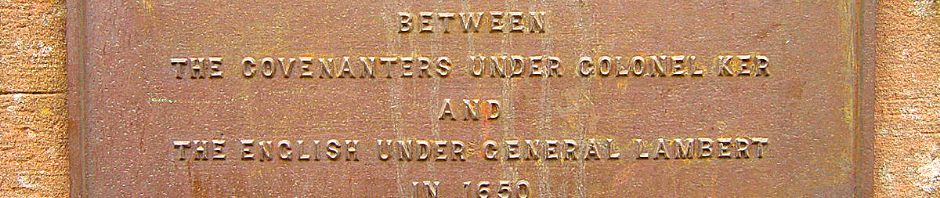
Shhh! I’m hiding in Sarah Jean’s Close, a public house in Hamilton in 1650. Well, not exactly. Today, I’m a guest of the English Historical Fiction Authors Blog where I tell the story of the Battle of Hamilton, or more recently known as the Battle of Hieton. This action was fought on December 1, 1650 between Scotland’s Western Army and English Parliamentary forces during Cromwell’s invasion of Scotland. Come by for a visit. I promise you political intrigue, warfare and even a charming love story. Featured Image: Memorial plaque of the Battle of Hamilton (Hieton) By User: Supergolden (Taken by User: Supergolden)…

Finding the Fugitive King a Ship (Finale)

Up until now, our fugitive King, Charles Stuart, has hidden in a tree, fought off a deranged miller, crouched in a priest’s hole, sparred with a Republican smith, and ridden past a sea of enemy dragoons, all while picking up lessons on the speech and comportment of a country fellow. He’s had a busy time of it, but now we get to the final stretch. Our King must find a ship. After Charles had left the Nortons of Abbotsleigh, he arrived at Trent, the home of a close acquaintance, Colonel Frank Wyndham, who set to work to find him a…

Finding the Fugitive King (Part 3): Damsel saves the day

  By the time Charles Stuart left Moseley Old Hall on September 9, 1651, Parliament had circulated a £1000 reward for his capture. This was no mean sum. To put this in perspective, a labourer made an average of £9 per year*, and it would have taken him over 110 years to earn the value of the reward. In today’s dollars, based on the average UK farmer’s salary** of £24,500 the reward would be approximately £545,000. The stakes were definitely high. Our old friend Thomas Whitgreave recommended the services of Colonel John Lane of Bentley Hall to Charles. The Colonel had…